
The World's Most Critical Shipping Lane Is Effectively Shut — What the Hormuz Crisis Means for Every Economy on Earth
The Strait of Hormuz is 33 kilometers wide at its narrowest point. It is the single most economically critical waterway on the planet. Every drop of oil from Kuwait, Iraq, Iran, the UAE, and Qatar must pass through it to reach global markets.
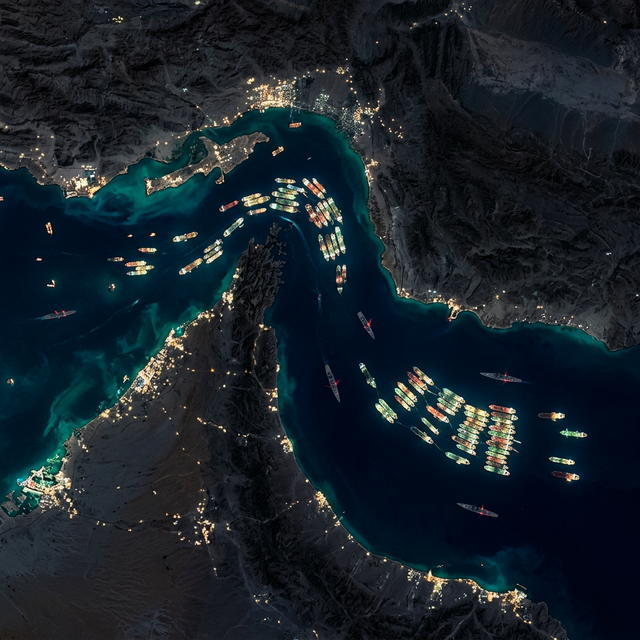
As of the morning of March 3, 2026, traffic through the strait has fallen to nearly zero.
This is not a formal blockade. No mines have been confirmed. No naval vessels are physically blocking passage. What has happened is arguably more destabilizing: voluntary commercial paralysis. Every shipping operator with a tanker en route to or from the Persian Gulf has altered course, dropped anchor in holding positions, or diverted around Africa.
The chokepoint is shut by market logic alone — and that may be the most dangerous version of a closure that can exist.
[!WARNING] Voluntary commercial shutdown without an active military blockade is harder to resolve. There is no "clear the mines" or "lift the sanctions" trigger. Traffic will only resume when shipping companies, insurers, and their clients independently conclude the risk is acceptable. That threshold is very high.
The Numbers That Define the Crisis
| Metric | Pre-Crisis | March 3, 2026 |
|---|---|---|
| Daily oil tankers transiting | ~60–70 VLCC vessels | Near zero |
| Daily oil volume in transit | ~20–21 million barrels | ~0–2 million barrels |
| LNG tankers per day | ~4–6 | 0 |
| War-risk insurance premium | 0.05% of cargo value | 3–5% of cargo value |
The insurance premium alone is now economically prohibitive. A 60,000-ton crude tanker carrying $120 million in oil would face $3.6–$6 million in one-way war-risk insurance — wiping out weeks of normal profit and making the voyage economically irrational.
What 20% of Global Oil Stranded Means — By Country Impact
The disruption is not uniform. Different nations are exposed in dramatically different ways based on their oil import dependency and where they source their oil:
Severely Impacted Nations
- Japan: ~25% of oil imports transit Hormuz. Japan has essentially zero domestic production. Emergency reserves cover ~90 days.
- South Korea: ~75% of crude oil imports flow through the strait. A key chip and electronics manufacturing powerhouse — every factory runs on oil.
- India: A rapidly growing economy with significant Gulf oil dependency. India has been strategically building reserves, but a prolonged closure would be painful.
- China: Despite its reserves and alternative pipelines including Kazakhstan routes, approximately 45% of Chinese seaborne crude passes through Hormuz. This is Beijing's most sensitive strategic vulnerability.
Moderately Impacted Nations
- European Union: Europe shifted significantly away from Gulf oil after 2022. Their exposure is real but lower — approximately 10–15% of total crude supply.
- United States: Largely self-sufficient in oil production, but exposed through global price effects and LNG export market disruption.
Nations That Benefit
- Norway: North Sea production sees windfall as buyers scramble for non-Gulf alternatives.
- Canada: Alberta oil sands producers are suddenly the most attractive boring investment on earth.
- United States Shale Producers: U.S. shale economics become viable at $95+ per barrel that were marginal at $75.
The Africa Detour: Real Costs, Real Delays
For tankers that do continue voyaging, the alternative is dramatic: sailing around the Cape of Good Hope at the southern tip of Africa. This adds:
- 10–14 additional days to the voyage
- 35–40% higher fuel consumption
- Additional crew costs and port fees
- Massive additional insurance costs for hull wear
This alternative route can absorb some of the volume — but not all. The Cape of Good Hope shipping lanes are already congested due to the ongoing Red Sea crisis, which has diverted significant commercial traffic since 2024. Two simultaneous maritime crises are creating a compounding freight cost escalation.
The Ghost Fleet Problem
Iran maintains a fleet of "shadow tankers" — older vessels operating outside normal AIS tracking systems, often insured through non-standard Lloyd's arrangements and flying flags of convenience. These vessels have historically moved Iranian oil in defiance of sanctions.
In the current crisis, the question is whether these ghost fleet operators will fill any of the vacuum — and whether that creates new intelligence and interdiction flashpoints at sea.
When Does Shipping Resume?
Based on analysis of past maritime crises, traffic through a major chokepoint resumes when all three of the following conditions are met:
- ✅ Physical attacks on commercial vessels cease
- ✅ War-risk insurance premiums fall below ~0.5% of cargo value
- ✅ A minimum of 72 hours without incident occurs to allow insurers to recalibrate
None of these conditions are currently met. Until they are, the strait remains economically closed — regardless of whether a military vessel fires another shot.
The world is watching a chokepoint in real time. The economic consequences are already rippling across every supply chain on the planet.